Best Practice Strategies for Balancing Multiple Woodwind Parts
Understanding Woodwind Timbre and Acoustics
Balancing multiple woodwind parts begins with a deep grasp of each instrumentâs acoustic behavior. The physics of sound production varies significantly across the family. Flutes produce sound by splitting an air stream across an edge, yielding a bright, agile tone that tends to be softest in the lower register and more piercing in the high range. The fluteâs lowest octave (C4 to C5) is notoriously weak in projection, often swallowed by other instruments, while notes above C6 can become strident if not controlled. Oboes use a double reed that creates a concentrated, penetrating sound with strong projection even at moderate dynamics, often dominating a texture if left unmanaged.
The oboeâs middle register (D5 to G5) is especially powerful and can cut through a full orchestra. Clarinets employ a single reed and a cylindrical bore, giving them a wide dynamic range and a smooth tone that blends easily but can also cut through when needed. The clarinetâs âthroat tonesâ (G4 to Bb4) are weaker and require careful voicing to balance. Bassoons, also double-reed, have a rich, dark, reedy quality that supplies bass and tenor foundations, though their projection can be limited in large ensembles. The bassoonâs lowest octave (Bb1 to D3) is warm but easily masked by brass or lower strings.
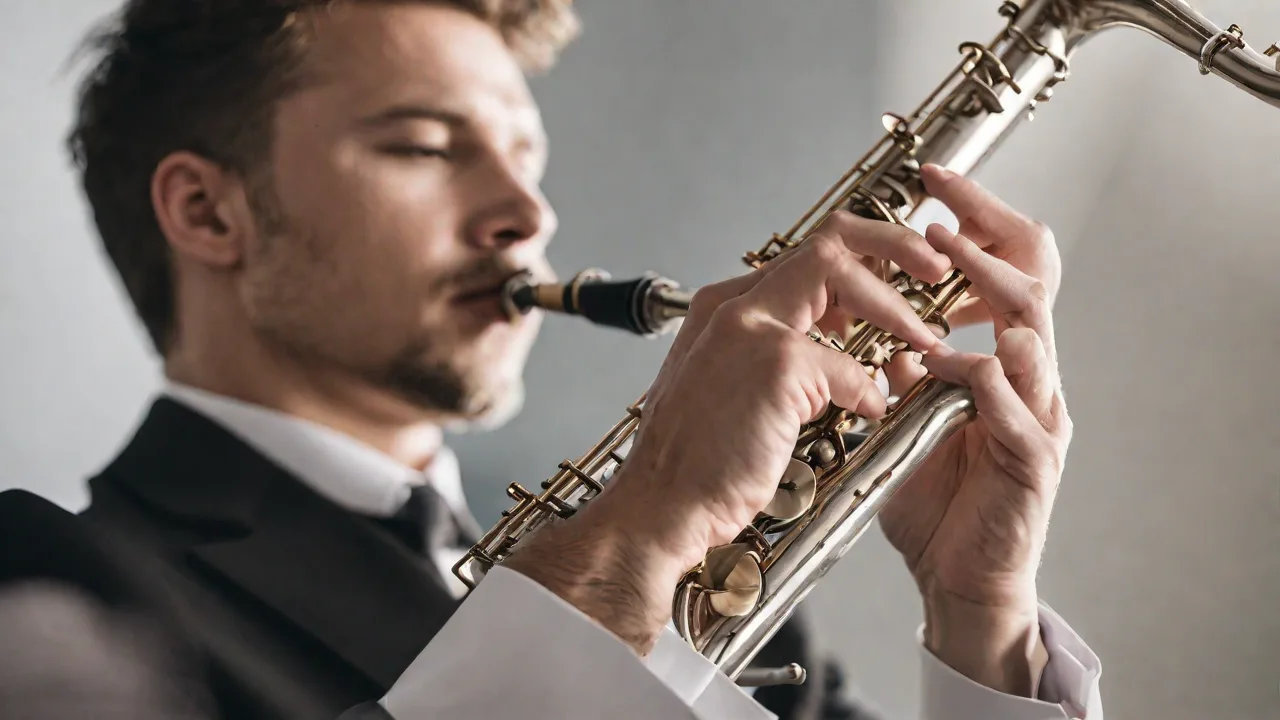
Saxophones, while less common in classical woodwind sections, offer a warm, versatile voice that bridges woodwinds and brass; their wide dynamic range can overwhelm smaller ensembles if not managed.
Acoustically, the harmonic content of each instrument differs. Flutes have relatively few overtones, creating a pure, airy sound that blends well but can lack presence in dense textures. Oboes have strong upper partials, giving them a nasal, incisive character that makes them ideal for melodic prominence but problematic in homogeneous chords. Clarinets emphasize odd-numbered harmonics, producing a hollow, woody timbre that becomes richer and more complex in the upper register. Bassoons have a complex spectrum with strong even and odd harmonics, contributing to their rich, buzz-like sound.
Recognizing these spectral signatures helps composers and arrangers predict how instruments will blend or conflict. For instance, pairing a clarinet with a flute in unison can produce a smooth blend, while oboe and bassoon in octaves creates a balanced, colorful line. When doublings cross registers, careful voicing is essential to avoid muddiness or shrillness. The interaction of overtones is especially critical in close-voiced chords: an oboe playing a third above a clarinet can create a beating effect due to inharmonicity.
External factors such as room acoustics, seating arrangement, and the number of players per part also affect balance. In a resonant hall, softer instruments like the flute may be overwhelmed, while in a dry acoustic, the oboeâs projection can become harsh. Seating woodwinds in pairs (two flutes, two oboes, etc.) versus single players per part changes the dynamic weight. Composers should consider the performance space when scoring woodwinds. For example, writing a solo flute passage in a large concert hall may require doubling the line with a clarinet an octave lower to ensure audibility.
For more on woodwind acoustics, see the UNSW Acoustics of Woodwind Instruments page.
Core Orchestration Principles for Balance
Voicing and Spacing
The vertical arrangement of notes is the first line of defense against imbalance. Avoid placing all woodwinds in the same narrow register, especially the upper middle range where overtones clash. Instead, spread chords over two or more octaves, using the unique timbres of each register. For example, write a low G for bassoon, middle G for clarinet, and high G for flute. This spacing allows each instrument to occupy its most resonant range and reduces masking.
Research by orchestration theorists like Samuel Adler recommends that close-position chords for woodwinds be reserved for special effects, as they can become congested. Open voicing is generally clearer. A practical rule is to leave at least a perfect fifth between adjacent woodwind parts in a chord when possible, especially in the lower half of the stave.
Doubling strategies should be deliberate. Rather than doubling whole sections, double only critical notesâsuch as the melody or bass lineâto thicken the texture without losing clarity. When doubling at the octave, choose instruments whose timbres complement each other; for example, doubling a flute melody an octave lower with a clarinet adds warmth and body. Thirds and sixths can be effective for harmonic doublings, but avoid doubling at the unison in tutti passages unless you want a deliberately rich, blended sound. Unison doublings between oboe and clarinet can be especially problematic because the oboeâs upper partials can clash with the clarinetâs odd-harmonic series.
For a discussion of doublings in orchestration, refer to Encyclopaedia Britannicaâs Orchestration overview.
Dynamic Markings and Balance
Dynamics are not absolute; they are relative within the ensemble. A mezzo-forte on a bassoon may sound like a forte on a flute. Composers should adjust markings based on each instrumentâs natural dynamic propensity. In a woodwind choir, the oboe and clarinet can easily overpower the flute and bassoon in the mid-range. Use dynamic offsets: give flutes a marking one notch higher than the rest (e.g., mf when others play mp) to help them project.
This principle applies especially to phrase shaping. Crescendos and decrescendos should be coordinated across the section to ensure that no instrument suddenly dominates. For example, during a crescendo leading to a climax, the oboeâs natural brightness may cause it to jump out; reduce its dynamic marking by one level (from f to mf) during that section.
Articulation further refines balance. A staccato flute line can be lost under a legato oboe melody. To balance such textures, consider altering articulations: make the oboe play slightly detached, or have the flute accent its notes. Markings like tenuto, marcato, and portato provide useful nuance. In a score, be explicitâuse symbols and text to guide players toward the desired blend.
For instance, marking a flute phrase with âsonoreâ (sonorous) while the oboe plays âdolceâ (sweet) can shift the perceived importance.
Register and Timbre Pairing
Choosing the right register for each instrument within a chord is a subtle art. The fluteâs low register is weak; if you need a bass woodwind line, use bassoon or bass clarinet instead. The oboeâs low register (below D4) is less piercing and can blend well with clarinet in thirds. The clarinetâs âaltissimoâ register (above C6) is very bright and can cut through even a full orchestra; use it sparingly for melodic highlights. The bassoonâs tenor register (D4 to G4) is remarkably expressive and can double as a middle voice without dominating.
When writing for mixed woodwind quintet, a common successful voicing is: flute on top (G5), clarinet on the third (E5), oboe on the fifth (D5), bassoon on the root (G4) â this open voicing gives each instrument room to be heard.
Rehearsal Techniques for the Woodwind Section
Even the most carefully scored woodwind parts require rehearsal to achieve balance. A sectional rehearsal dedicated to the woodwinds allows players to hear each other without brass or string interference. Begin by having all players play a unison note at the same dynamic, then adjust individual volumes to create a balanced chord. This builds awareness of each otherâs sound. Next, practice doublings and solo passages, emphasizing active listening.
A practical exercise is to have half the section play, then the other half, and finally together, discussing what changed. Another useful drill is the âlayeringâ exercise: start with only one instrument, then add one part at a time, asking the new player to fit into the existing dynamic level.
Use a âbalance buddyâ system: pair a weaker instrument (e.g., flute) with a stronger one (e.g., oboe) for a passage, asking them to match volume and tone. This works particularly well for unison or octave doublings. For example, in a passage where flute and clarinet double the melody, have the clarinet play slightly softer than normal to let the flute project the upper octave. Recordings of rehearsals are invaluableâplay back sections to identify where a part gets buried or protrudes harshly. Also, consider recording balance from different distances in the hall, as stage balance may differ from audience perception.
Position a recorder in the middle of the hall and another on stage; compare the two to understand what the audience hears versus what players hear.
For conductors, it helps to sit among the woodwinds during sectional listening. Learn to identify which instruments are present in the blend and which are missing. Encourage woodwinds to use the full dynamic range, but also to be willing to play under another instrument when necessary. This skill is essential for ensemble cohesion and is discussed further in NPR’s article on listening skills for orchestral musicians. Conductors should also instruct woodwinds to match vibrato width and speed, as differing vibrato can cause a section to sound unbalanced even at the same dynamic.
Leveraging Technology and Recording
In the digital age, balancing woodwinds can be tested before a note is played live. High-quality sample libraries allow composers to audition doublings and experiment with dynamic levels. Libraries such as Spitfire BBC Symphony Orchestra, Berlin Woodwinds, or VSL provide realistic timbres that help identify potential masking issues. When using MIDI playback, listen critically: virtual instruments often lack the subtle dynamic shading of live players, but they can reveal if a part is consistently inaudible or overpowering. Use the solo/mute functions to isolate parts and compare their levels.
Also, adjust the panning in a DAW to simulate seating: place flutes slightly left, oboes center-left, clarinets center-right, and bassoons right, matching a typical orchestral layout.
In a recording studio, microphone placement is critical. Use close miking for individual woodwinds, then blend them in the mix. Common practice is to place a stereo pair of room mics to capture the natural blend, then add spot mics for problem solos. Equalization can help balance frequencies: for example, a small cut at 1â2 kHz on the oboe can reduce penetration without losing character, while a boost at 2â4 kHz on the flute can add presence. Compression should be used sparingly to avoid flattening the natural dynamics; consider using multiband compression to tame certain frequency ranges without squashing the whole instrument.
For more on mixing woodwinds, see Sound on Soundâs guide to recording woodwinds.
Notation software also offers balance-checking tools. Sibelius and Finale allow you to set dynamic import levels per staff – use this to simulate the relative strength of each instrument. Additionally, some software can export MIDI levels that correspond to dynamic markings; adjust these to create a more realistic mix. Export a rough audio file and listen on multiple playback systems (speakers, headphones, laptop) to catch imbalances that might not be obvious on studio monitors.
Common Pitfalls and Solutions
Despite careful planning, certain problems recur. One frequent issue is the bassoon not being heard in a tutti passage. Solution: write the bassoon part in its stronger middle or high register (D4âG4), or double it with a bass clarinet or cello. If the bassoon must stay low, reduce the number of other instruments playing in that octave. Another pitfall is the flute getting lost in the lower register.
Have the flutist play an octave higher or adjust dynamics; if the part is essential, consider giving it to a clarinet instead.
A muddy, cluttered texture occurs when all woodwinds play slow, sustained chords in the same register. Solution: break the chord into arpeggios, add rhythmic variation, or have some instruments rest. For example, in a sustained passage, let the oboe and bassoon sustain while the flute and clarinet play a rhythmic counter-line. Timbre clashes can arise from pairing instruments with conflicting harmonics, such as oboe and flugelhorn, or alto flute and bass clarinet in their extreme registers. If a clash is unavoidable, use articulation to soften itâlegato for one, detached for the other.
Also, be aware of register extremes: high clarinet (above C6) is very penetrating and can skew the balance; low flute (C4âE4) is almost inaudible in a full ensemble. Always consider the context: a solo line in the high clarinet can be effective, but in a tutti chord it will stick out.
Another common error is overlapping doublings in the same octave. For instance, if flute, oboe, and clarinet all play the same melody at the same pitch, the oboe will likely dominate, and the flute may be covered. Instead, distribute the melody across octaves: flute an octave higher, clarinet at pitch, oboe doubling the clarinet at the unison only if a thick sound is desired. Insufficient dynamic contrast between melody and accompaniment is another issue. Ensure that the accompanying parts are written one or two dynamic levels lower than the melody.
In a chamber setting, the difference may be subtle, but it is critical. Finally, ignoring the effect of articulation on balance: a legato oboe can easily float over a staccato bassoon. Pair articulations carefully: if the bassoon line is important, mark it as legato as well, or have the oboe play a more detached style.
One practical heuristic is to print the score large and check for balance visually: look at the dynamic markings, the voicing, and the number of instruments playing each line. A good practice is to mark each staff with a color representing its importance in the current passage—red for melody, blue for harmony, green for bass—to see if the hierarchy is clear. This visual method can prevent balance problems before rehearsal. Using a spreadsheet to list each instrument’s range and role in each measure can also be helpful for complex passages.
Conclusion
Balancing multiple woodwind parts is both a technical skill and an artistic sensitivity. By understanding the acoustic and timbral characteristics of each instrument, applying sound orchestration principles such as open voicing and strategic doublings, and actively rehearsing with focused listening, composers, arrangers, and performers can achieve clarity and richness. Technology offers valuable tools for previewing and troubleshooting, but nothing replaces live rehearsal and keen ear training. The most effective balance comes from a blend of knowledge, experimentation, and collaboration with musicians who understand how to adjust their sound in real time. These strategies, when applied consistently, ensure that every woodwind voice is heard and contributes to a cohesive, beautiful ensemble sound.
As you develop your ear, consider studying scores by master orchestrators like Ravel, Stravinsky, and Richard Strauss, who achieved extraordinary woodwind balance through careful voicing and dynamic nuance. Their work remains a living textbook on the art of woodwind balance.